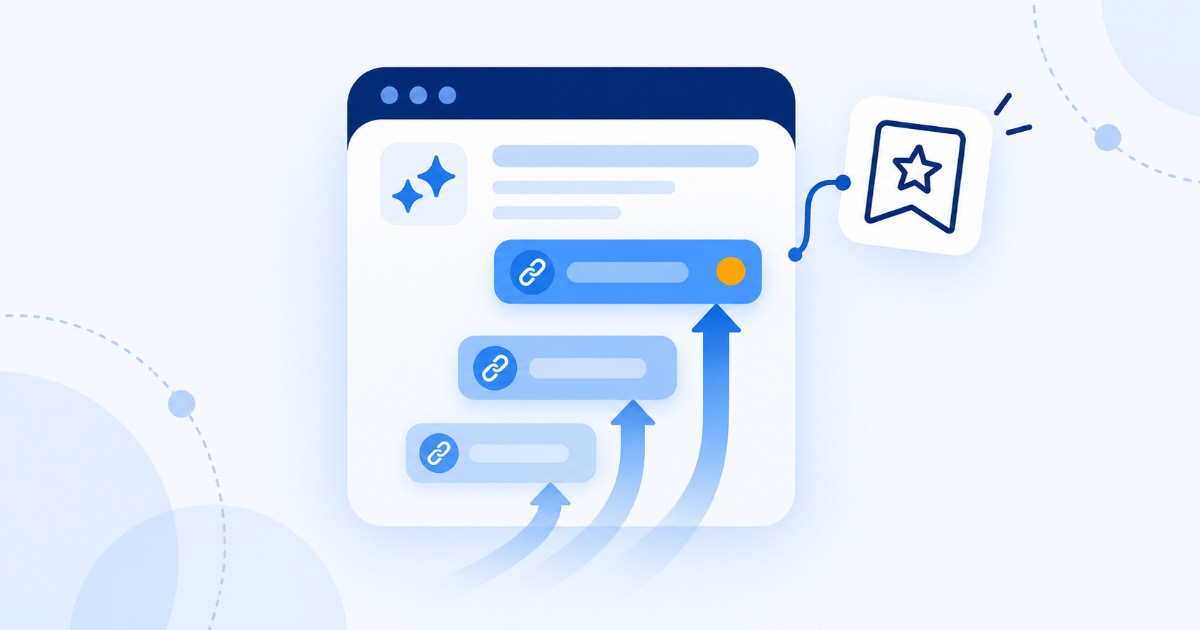

Ask an AI assistant "what is the best accounting software for a small agency" and it gives you three names, a short explanation, and a link or two. No results page, no ten blue links, no second chance. If your brand is not one of those three names, you were never part of the conversation.
That is the reality Answer Engine Optimization (AEO) exists for. Where traditional SEO competes for positions on a results page, AEO competes for a place inside the answer itself. The good news: the work is concrete, measurable, and most of your competitors are not doing it yet. This playbook covers the five steps we run for clients at Catchy Clouds, in the order we run them.
Why citations matter more than rankings
AI assistants do two things when they answer a question. They draw on what their training data already "knows" about your brand, and increasingly they run live searches and read a handful of pages before responding. In both cases, the assistant is deciding which sources to trust and which brands to name.
A citation in an AI answer behaves differently from a ranking:
- It is a recommendation, not a listing. Users treat an AI naming your brand as an endorsement, closer to word of mouth than to an advert.
- There are fewer slots. A results page has ten positions and paid ads. An AI answer typically names two to five sources. Scarcity raises the value of each slot.
- It compounds. The more often reliable sources mention your brand in a given context, the more strongly future models associate you with that context.
Step 1: Answer one question per page, completely
Answer engines extract passages, not pages. A 3,000-word post that touches ten topics gives the model nothing clean to lift. A focused page that fully resolves one question gives it a perfect candidate passage.
For every important question in your niche, build a page that:
- States the question in the H1 or opening line, phrased the way a real person asks it;
- Gives a direct, self-contained answer in the first two or three sentences, before any background;
- Then expands with evidence, examples, and edge cases for readers who want depth;
- Avoids burying the answer under a long introduction. If the answer starts at paragraph seven, you have already lost the extraction.
A useful internal test: could someone copy your opening paragraph into a chat message and have it stand alone as a correct, complete answer? If yes, an answer engine can do the same.
Step 2: Give machines structure they can parse
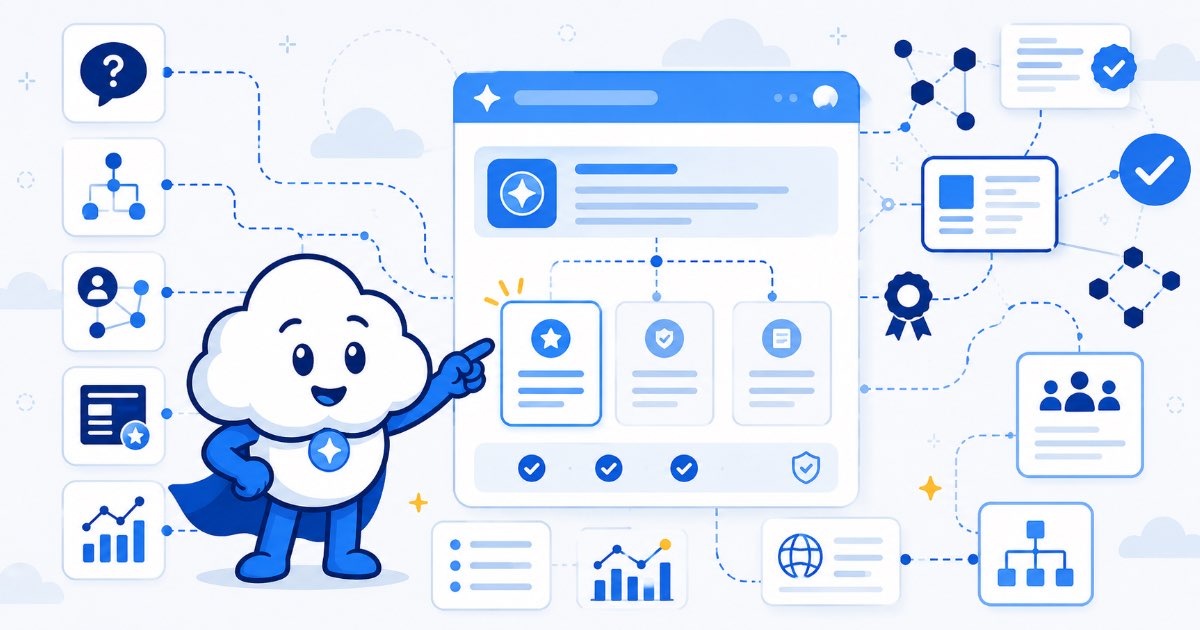
Structured data is how you remove ambiguity for a machine reader. The schema types that matter most for AEO are:
- Organization on your homepage, with sameAs links to your verified profiles, so models can connect your website to your wider identity;
- FAQPage or Question markup on pages built around questions;
- Article or BlogPosting with real author, date, and publisher fields;
- Product and Service markup with honest pricing and review data where applicable.
Beyond schema, the humble basics still carry weight: descriptive headings in a logical hierarchy, tables for comparisons, and lists for steps. Models are trained on the open web; they read well-structured HTML more accurately than clever layouts.
Step 3: Make your entity unmistakable
An "entity" is simply the machine's concept of who you are. Weak entities get confused with similarly named companies or dropped from answers entirely. Strengthen yours by keeping your name, description, and category identical everywhere they appear:
- Your About page should state plainly what you do, for whom, and since when, in the first paragraph;
- Your Google Business Profile, LinkedIn, Crunchbase, and industry directories should use the same one-line description;
- If your brand name is ambiguous, pair it consistently with a category qualifier, for example "Catchy Clouds, an SEO and AEO agency."
This sounds unglamorous. It is also one of the highest-leverage fixes we make, because consistency is exactly what statistical models reward.
Step 4: Earn mentions where models look
AI systems weigh sources by reliability. Being mentioned in respected industry publications, comparison articles, podcasts with transcripts, and community discussions teaches models that your brand belongs in certain answers. Practical moves:
- Pitch data-backed stories to trade publications; original statistics get quoted, and quotes become training data;
- Get listed in credible "best X for Y" roundups, since those articles are precisely what assistants read when asked for recommendations;
- Answer real questions on forums and communities where your buyers ask them, generously and without spam;
- Publish research or tools worth referencing, because reference-worthy assets attract the durable links and mentions that both SEO and AEO reward.
Step 5: Measure your AI visibility
You cannot manage what you never check. Once a month, ask the major assistants the questions your buyers ask, in fresh sessions, and record the results:
- Which brands are named, and in what order?
- Is your brand described accurately when it does appear?
- Which sources do the answers cite, and could you be featured in those sources?
Track this in a simple spreadsheet alongside your traditional rank tracking. Over a quarter, the pattern tells you whether your AEO work is moving the needle and which competitor is winning the slots you want.
The short checklist
- One question, one page, answer first;
- Organization, FAQ, and Article schema in place and valid;
- Identical brand description across every profile and directory;
- Ongoing mentions in publications and roundups models trust;
- Monthly AI answer audits, logged and compared.
None of these steps is complicated on its own. The advantage comes from doing all five consistently while your competitors are still optimizing only for the results page. If you would like to know where your brand stands inside AI answers today, request a free audit and we will map it for you, question by question.