
A press release that gets coverage follows one structure: a headline that states the news plainly, a first paragraph answering who, what, when, where, and why, one strong statistic, one quotable line from a named person, and a consistent company boilerplate at the end. Keep it under 500 words, write it like a news story rather than an advert, and pitch it to specific journalists instead of relying on distribution alone. This guide walks through each part with examples you can copy.
The structure journalists expect
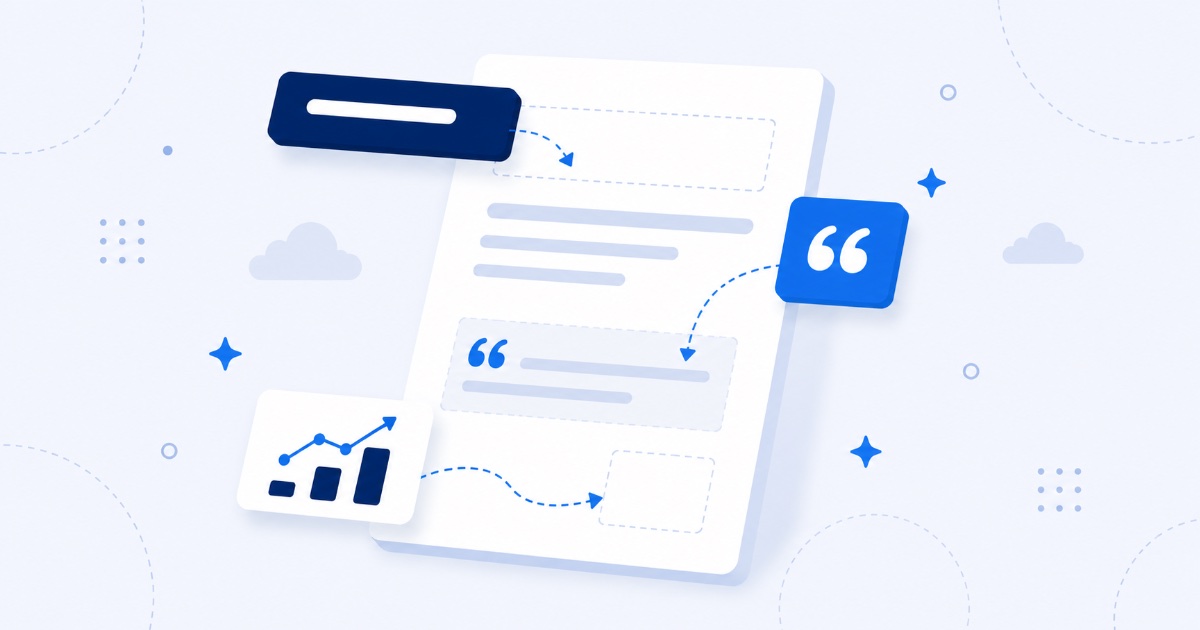
Reporters skim dozens of releases a day and give each one seconds. A release earns those seconds by putting information exactly where a trained reader looks for it:
- Headline: the news in ten words or fewer, no cleverness;
- Subheadline (optional): one line adding the most important detail;
- Dateline and lede: city, date, and a first paragraph that could stand alone as the entire story;
- Body: two or three short paragraphs of supporting detail, data first;
- Quote: one named person saying something with an opinion in it;
- Boilerplate: your standard company description, identical in every release;
- Contact: a real person, a real email, a real phone number.
Write the headline like a news editor
The headline states what happened, to whom, and why it matters, in plain declarative language. Compare:
- Weak: "Leading Innovative Agency Announces Exciting New Milestone"
- Strong: "Bali Agency Study: 45 Percent of Local Searches Now End in AI Answers"
The weak version contains five empty adjectives and zero facts. The strong version contains a place, a number, and a finding a journalist could build a story on. If your headline works with the company name removed, it is about news; if it collapses, it is about you, and reporters do not cover adverts.
The first paragraph is the whole story
Newsrooms cut from the bottom, and AI assistants extract from the top, so the lede has to carry everything: who did what, when, where, and why anyone should care, in three sentences or fewer. A useful test we run on every client release: delete everything except the first paragraph and ask whether a stranger could accurately retell the news. If not, the missing fact moves up.
Give them one number and one voice
Two elements get lifted into coverage more than everything else combined: statistics and quotes. According to the Princeton GEO study presented at KDD 2024, adding statistics and citing sources each raised content visibility in AI answers by roughly 30 to 40 percent, and the same materials are what journalists quote directly.
Make the statistic yours if you possibly can: a survey of your customers, a pattern in your data, a benchmark from your industry. Original numbers make you the source everyone else must cite. And write the quote like a human being with a stake, not a committee. "We are thrilled to announce" says nothing; "Half our new clients now find us through AI assistants, and most of them never saw a results page" says everything.
A fill-in template
Headline: [Company or finding] + [what happened] + [the number or detail that makes it news]
Lede: [CITY, Date] -- [Company], [one-line description], today [announced / published / launched] [the news], [the single most important detail or number]. [One sentence on why it matters to the industry or customers.]
Body paragraph 1: The key data or details, most important first.
Body paragraph 2: Context: what this changes, who it affects, what happens next.
Quote: "[An opinion or first-hand observation, one or two sentences]," said [Full Name], [Title] at [Company].
Boilerplate: [Company] is [category] that [what you do] for [who you serve], based in [location]. Learn more at [URL]. Keep this word-for-word identical across every release, because consistent descriptions strengthen how search engines and AI systems understand your brand.
Contact: [Name], [email], [phone].
The mistakes that kill pickup
- No actual news. A release about nothing trains journalists to delete your name on sight.
- Marketing language. Every "revolutionary" and "cutting-edge" signals that facts are missing.
- Keyword-stuffed links. One link with a plain-name anchor is correct; optimized anchors across syndication match Google's definition of link spam, as we covered in what press releases actually do for SEO.
- Burying the news. If the announcement appears in paragraph three, the reader never met it.
- Distribution without pitching. The wire delivers copies; a short personal email to five relevant journalists delivers coverage.
Frequently asked questions
How long should a press release be?
Between 300 and 500 words. Long enough to carry the facts, short enough that nothing important hides. If you cannot fill 300 words without padding, the news may not be a release yet.
Should a press release be optimized for keywords?
Write the headline and lede in the natural language of the news, which usually includes your key terms anyway. Deliberate keyword optimization adds nothing, because release copies are filtered as duplicates, and it risks reading like spam to the journalists who matter.
Do AI assistants really read press releases?
They read the coverage and the syndicated copies when forming answers about companies and markets, which is why the lede, the statistic, and the boilerplate deserve the most care: those are the parts that get extracted. Our AEO playbook explains the wider system.
When is the best time to send a release?
Tuesday to Thursday mornings in your target journalists' time zone, avoiding major industry events unless your news relates to them. Timing helps at the margins; the strength of the story decides the outcome.
The bottom line
A press release succeeds when a busy journalist can turn it into a story without asking you a single question, and when an AI assistant can lift an accurate fact from its first paragraph. Structure, one number, one voice, and a consistent boilerplate get you there. If you would rather have releases written, pitched, and placed for you, that is exactly what our Digital PR service does, and a free audit will show you where earned coverage would move your visibility most.