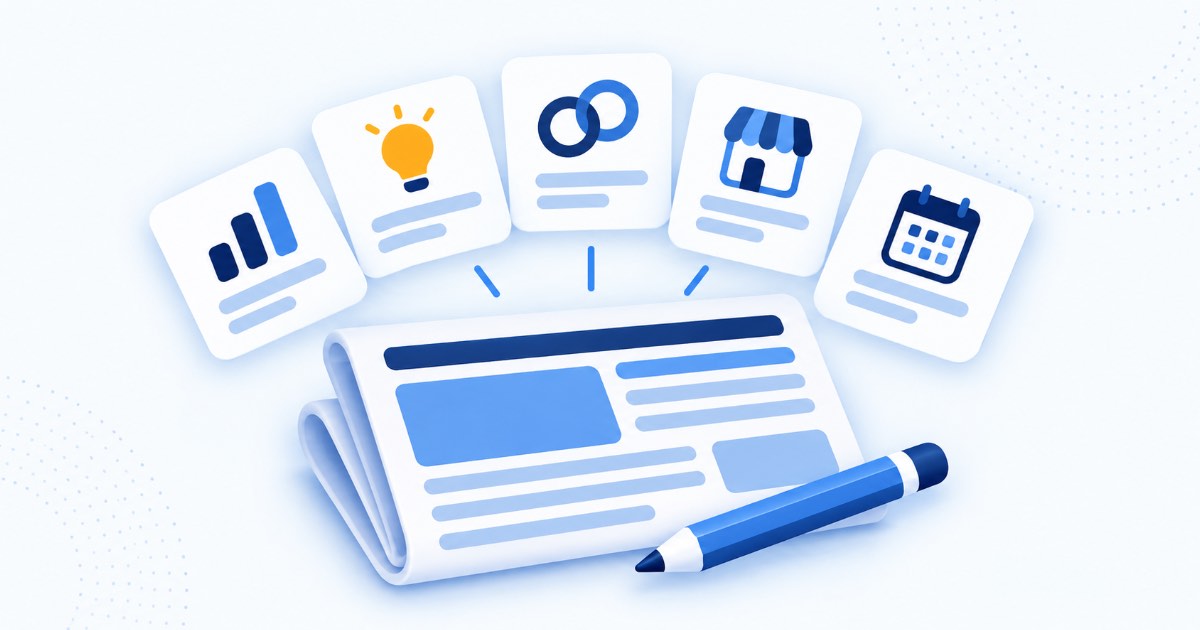

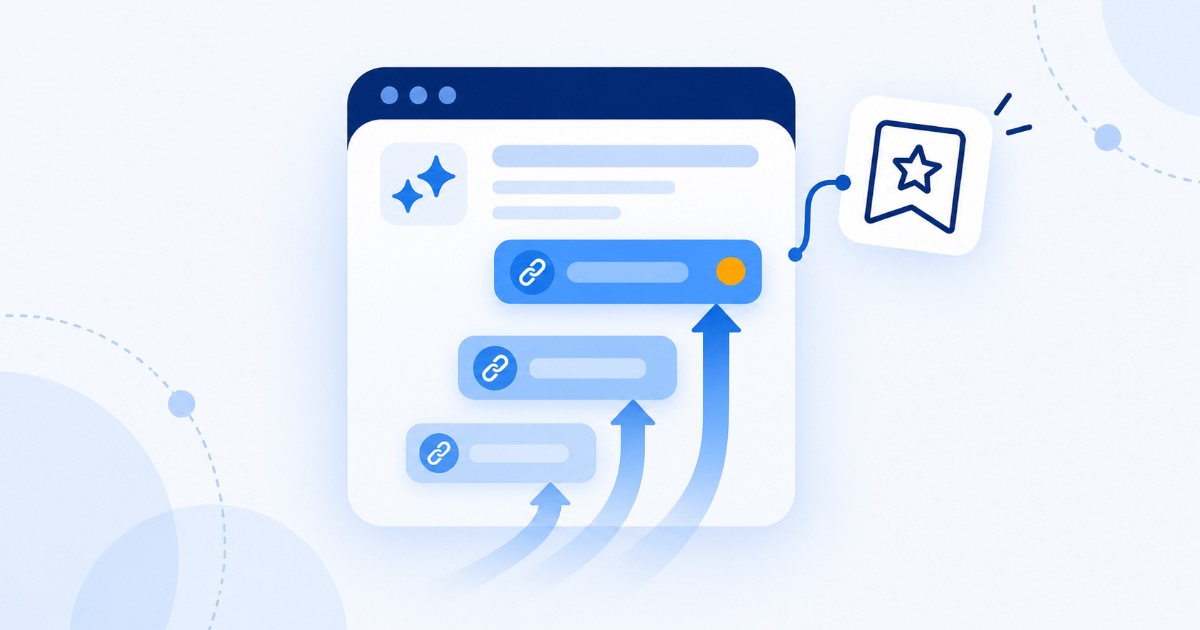
On 15 October 2026, Google announced five changes designed to make links more visible inside AI Overviews and AI Mode: inline links placed higher and more often within answers, a new section surfacing official sites at the top of some responses, news carousels expanding to more languages and locations, larger thumbnail links at the end of some answers, and clickable creator names on AI Mode videos. Google published no figures alongside any of it, and independent research still shows heavy click losses from AI answers. Both of those things are true at once, and the gap between them is where your strategy lives.
What actually changed
Google's VP of product management for Search set out five updates. In plain terms:
- Inline links, higher up. Links now appear within the text of AI responses more frequently and earlier, rather than only in a sources tray.
- An official-sites section. Where only a handful of authoritative sites exist for a task, a section at the top of the answer surfaces one or two of them with a note on why they are useful. Currently a test.
- Wider news carousels. Carousels for timely queries are rolling out to more locations and languages, and they highlight Preferred Sources.
- Thumbnail links at the end. Some responses now close with larger, image-led links to related articles.
- Clickable creator names. On some AI Mode video results, creator and publisher names are now clickable, though they lead to a Google Search profile page rather than the creator's own site.
Taken together, the direction is clear enough: more surfaces inside an AI answer where a link can appear, and more prominence for the ones that do.
The numbers Google did not provide
The announcement contained no click data. Not how much higher links appear, not how often, not what any of it did to traffic. That absence matters, because the independent measurements all point one way:
- A randomised study of 1,065 US participants found AI Overviews reduced outbound organic clicks by roughly 39.8%.
- Ahrefs measured a 58% click-through reduction for top-ranking pages in February 2026, up from 34.5% in April 2025.
- Google has said its AI features send "billions of clicks" weekly, without ever supplying a denominator to compare that against.
And the reporting gap persists where it would be easiest to close: Search Console's AI performance reports still show impressions without click data, which is the single most requested number in the industry. We covered what that report does and does not tell you in our guide to Google's AI search data.
So read the update as a change in design rather than a proven change in outcome. More visible links plausibly produce more clicks. Nobody has shown how many, including the company holding the data.
Why this is happening now
Three pieces of context sit around the announcement, and none of them are secret:
- Regulatory pressure with a date on it. A UK Competition and Markets Authority conduct requirement covering publishers takes legal force on 3 December 2026.
- A payment pilot. Google is running a programme paying roughly 100 publishers, a small number relative to the web, and a meaningful signal of direction.
- An exit door. Search Console now carries a toggle letting site owners remove themselves from AI Overviews and AI Mode, which converts an argument about consent into a setting.
None of that makes the changes insincere. It does mean you should treat them as a moving target rather than a settled new normal, and avoid rebuilding your strategy around a design that is three days old and partly in testing.
The free play almost nobody is running
Buried in the announcement is the most actionable thing in it. Preferred Sources lets a person nominate publications they want to see more of in Google's news surfaces, and those choices now feed the carousels being expanded. Google said usage has grown more than sevenfold since the start of 2026, and on 6 October it began emailing site owners their Preferred Source counts.
Treat that figure as directional rather than precise. Google published no baseline, and earlier milestones for this feature counted unique sources selected rather than people, so "sevenfold" describes a trend rather than a measured user count.
The play is simple and costs nothing: if you publish anything with a returning audience, ask them to add you as a Preferred Source. An email to your list, a line at the end of your articles, a note to clients who already read you. It is the rare visibility mechanism where your existing audience can directly improve your distribution, and almost no small business has asked.
How to be one of the linked sources
More link slots only help businesses eligible to fill them. The qualifying work has not changed:
- Be the official source for something. The new official-sites section favours the authoritative page for a task. For your own services, pricing, process, and policies, that page should be yours, complete, and unambiguous.
- Answer in extractable passages. Links attach to the sentences an assistant actually uses, so a page that resolves a question in its opening lines is eligible far more often than one that buries the answer.
- Publish on timely questions. Carousels and related-article modules favour recency, which rewards businesses that publish when something changes rather than on a quarterly schedule.
- Get named, not just cited. A link without your brand in the sentence builds far less than a mention does, which is the distinction we set out in our piece on ghost citations.
- Keep measuring both channels. Impressions in AI surfaces, branded search, and direct traffic together tell you more than clicks alone, as argued in our zero-click guide.
If your pages are not currently surfacing at all, this update changes nothing for you, and the starting point is the structural work in our AEO playbook.
Frequently asked questions
Does this mean zero-click search is reversing?
There is no evidence of that yet. More prominent links are a reasonable mechanism for recovering some clicks, and no published data shows it happening at scale. Plan for a world where most searches still end without a visit, and treat any recovery as upside rather than a forecast.
How do I get added as a Preferred Source?
Your readers add you, from Google's news surfaces, by nominating the publications they want to see more of. You cannot add yourself, which is exactly why asking your audience is the whole tactic.
Should I use the Search Console toggle to opt out of AI features?
For most businesses seeking customers, no. Opting out removes you from the answers your buyers read while leaving your competitors in them. For publishers whose entire model is paid content access, it is a legitimate commercial position with a real cost attached.
Will Google ever report AI clicks in Search Console?
Unknown, and worth watching, because the pressure to publish it is now regulatory as well as commercial. Until it exists, impressions plus your own branded search and direct traffic remain the honest proxy, with the caveats in our guide to reading search statistics.
The bottom line
Google has added more places for links to appear inside AI answers, published no data about what that does, and done it weeks before a UK conduct requirement takes force. The sensible response is neither celebration nor cynicism: keep building the eligibility that lets you fill a link slot, ask your audience to make you a Preferred Source this week, and judge the change by your own numbers rather than anyone's announcement. If you would like to know whether your pages are currently eligible to be linked at all, our free SEO and AEO audit shows exactly where your business appears across search and the major assistants today, and what is keeping it out of the rest.