
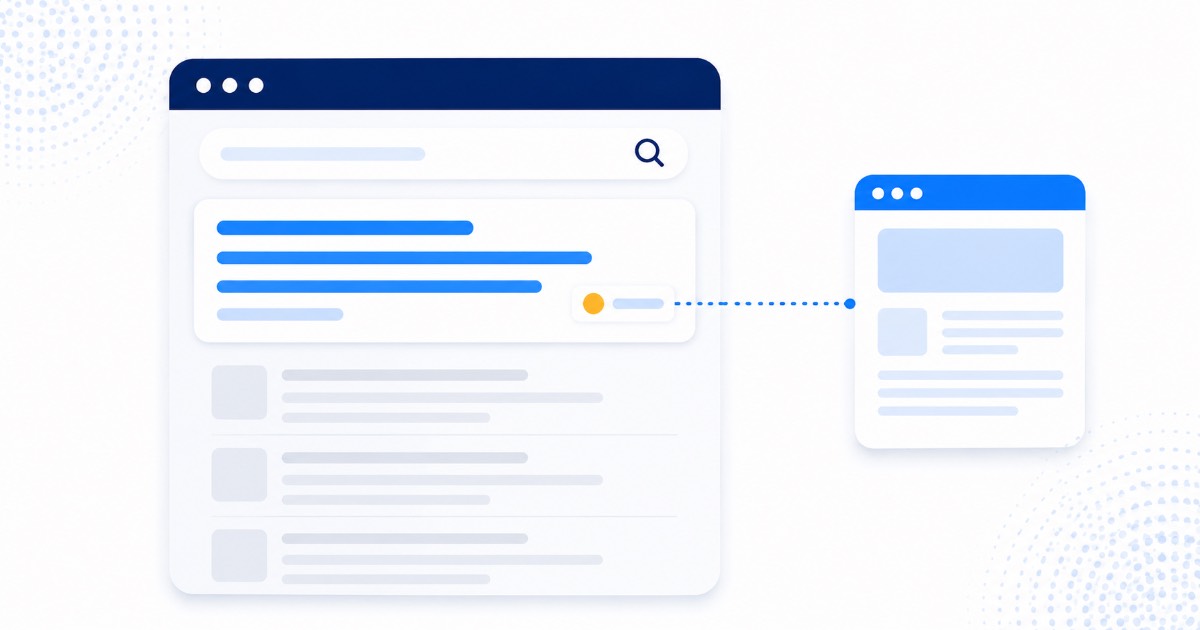
Most Google searches now end without anyone clicking through to a website, and AI Overviews are pushing that number higher. If your entire marketing model assumes people search, click, and land on your page, that model is quietly breaking. But zero-click does not mean zero value. It means the value moved: from the visit to the mention, from the session to the citation, from traffic you count to demand you create. Four strategies still work, and the businesses using them are compounding while everyone else refreshes their analytics in despair.
What zero-click actually means
A zero-click search is one where the searcher gets what they needed on the results page itself: a featured snippet, a knowledge panel, a weather box, a local map, or increasingly an AI Overview that answers the question outright. The searcher is satisfied. Nobody visits a website. The query is resolved, and no analytics platform on earth records it as a win for you.
This is not new, and that matters. Google has been answering questions directly since the first knowledge panels a decade ago, and businesses adapted. What changed is scale and scope: AI answers can handle complex, comparative, multi-step questions that used to require reading three websites, which pushes zero-click into the commercial queries that actually made money.
Why the panic is half right
The honest read is that some content genuinely lost its business model. Pages that existed purely to answer a quick factual question, what is the capital of Peru, how many grams in an ounce, what does this acronym mean, were always fragile, because the value they provided was a lookup that any answer engine can perform.
What survives is everything that cannot be resolved in a paragraph: judgment, service, comparison with a stake, original data, tools that do something, and businesses people need to actually hire or buy from. Notice that this describes most real businesses. The publishers hit hardest were the ones monetizing lookups with ads, which was never your model.
Four strategies that still work
1. Win the answer instead of the click
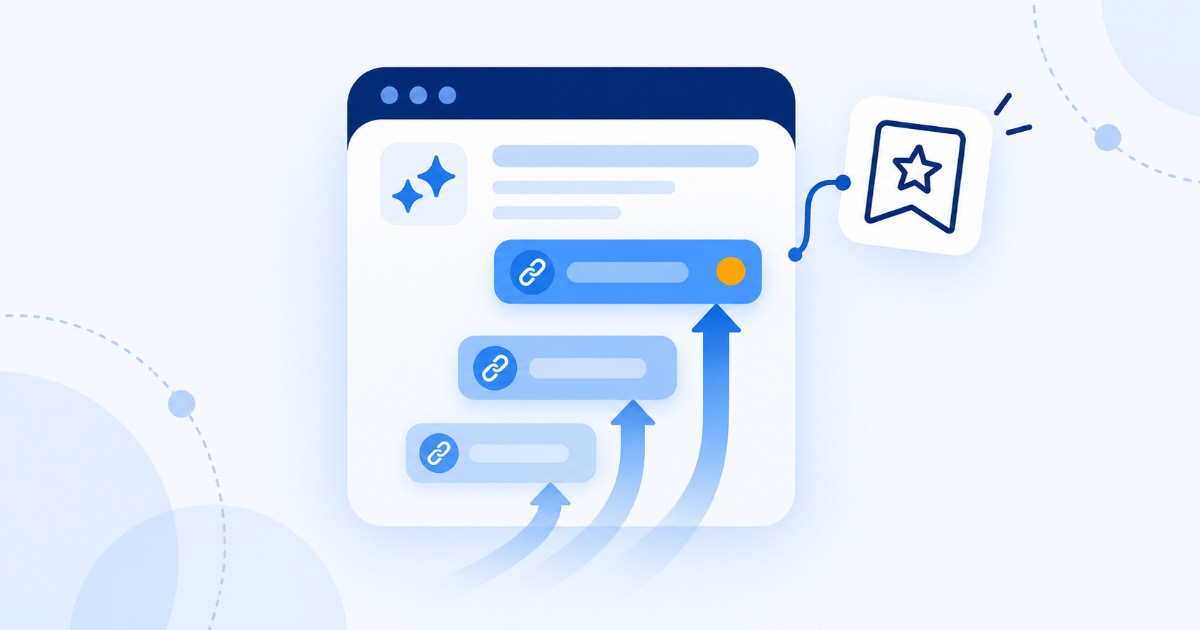
If the answer box is where attention goes, be inside it. Being the cited source in an AI answer or featured snippet delivers brand exposure to someone in an active buying moment, with an implicit endorsement no advert can buy. It is a smaller unit of value than a visit, delivered at far greater volume, and it compounds into recognition. Our AEO playbook covers the mechanics, and where AI answers come from explains why the citation happens at all.
2. Target queries that cannot be answered without you
Some questions resolve in a sentence. Others require your product, your data, your tool, or your judgment. Shift your content investment toward the second kind:
- Original research and benchmarks nobody else has;
- Interactive tools, calculators, and templates that must be used rather than read;
- Deep comparisons with a genuine recommendation attached;
- Local and service queries where the next step is contacting a business;
- Anything requiring first-hand experience: what actually happened when you ran the campaign, treated the case, built the thing.
An AI can summarize your calculator. It cannot run it for the user.
3. Build demand that skips search entirely
The most durable answer to zero-click is being searched for by name. Branded search survives every algorithm change, converts several times better than generic terms, and cannot be intercepted by an answer box, because the searcher is looking for you specifically. That demand comes from the channels that create familiarity: coverage, community presence, video, email, referrals, and reputation. This is why we treat digital PR and social as search infrastructure rather than separate budgets.
4. Make the clicks you still get worth more
Fewer visitors raises the value of each one. If half your traffic disappeared but your conversion rate doubled, nothing was lost. Most sites have far more room in the second number than they think, and the work, clearer pages, faster load, honest CTAs, easier contact, is cheaper than the traffic it replaces.
The metrics that replace traffic
Reporting built entirely on sessions will show a business in decline even while it grows. Add these:
- Impressions and citation share. Search Console impressions show you are being surfaced even when clicks fall; citation tracking shows how often assistants name you. Our 15-minute self-test is the free version.
- Branded search volume. The clearest signal that your visibility is creating demand rather than just capturing it.
- Direct and dark traffic. People who saw you in an answer and typed your name later arrive as direct visits. Rising direct traffic alongside falling organic is often success, misread as failure.
- Lead quality, not lead volume. Zero-click filters out casual researchers. The people who still click are further along, which usually shows up as a better close rate.
If your traffic fell recently and you are not sure which cause applies, our guide to diagnosing a traffic drop separates a zero-click shift from a technical fault, because they look identical in a graph and need opposite responses.
Frequently asked questions
Is SEO dead because of zero-click search?
No, but traffic-only SEO is dying. The work of being findable, credible, and quotable matters more than ever, because there are fewer slots and the ones that remain carry more weight. What changed is how you measure success, not whether the work pays.
Should I block AI Overviews from using my content?
You can restrict AI features from using your content, but understand the trade: you also disappear from the answers your customers now read, while competitors remain. For publishers selling content access, it can be a legitimate rights position. For businesses seeking customers, it is usually opting out of your own shop window.
Do featured snippets and AI Overviews send any traffic at all?
Some, from users who want depth beyond the summary, and those visitors tend to be more engaged than average because they chose to go further. Treat the click as a bonus and the citation as the product.
Which businesses are least affected by zero-click?
Anyone selling something that requires a transaction, a booking, or a conversation: local services, professional services, ecommerce, and B2B. An AI answer can recommend a plumber; it cannot fix the pipe. The further your value sits from information, the safer you are.
The bottom line
Zero-click search ends the era of treating traffic as the product. What replaces it is older and sturdier: being known, trusted, and named at the moment someone is deciding. Win the answer, publish what cannot be summarized, build demand for your name, and convert the visitors you still get. If you want to see how your business currently appears when nobody clicks, our free SEO and AEO audit measures your citation presence alongside your rankings, so you can see both halves of the picture instead of half of one.