
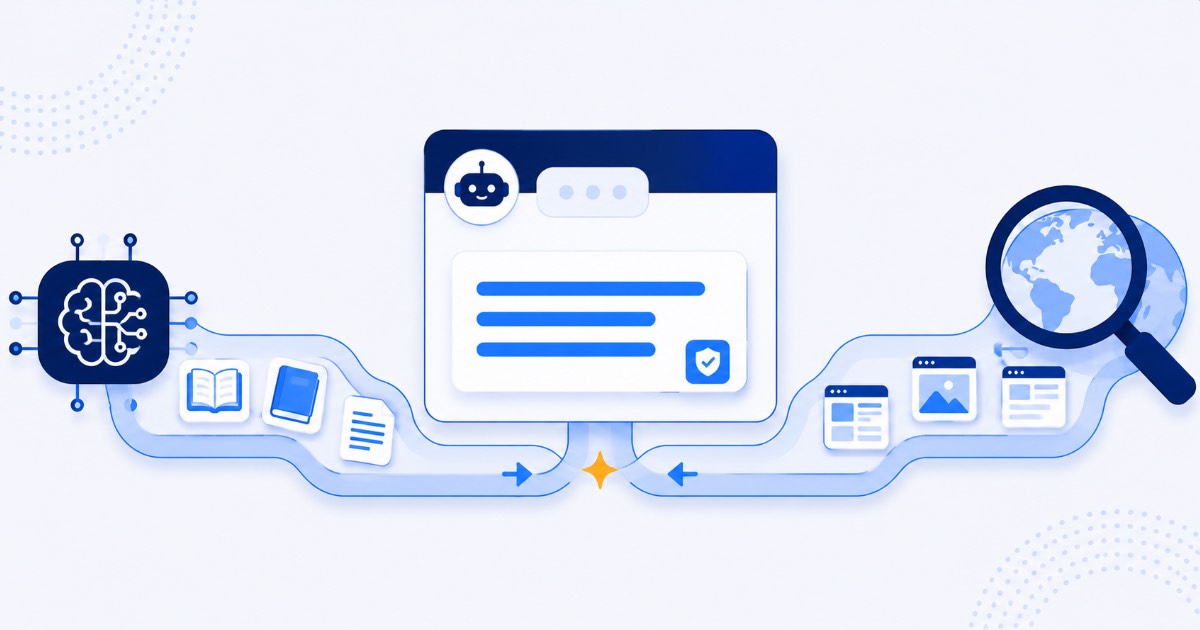
AI assistants build answers from two sources and only two: training data, the enormous snapshot of text the model learned from months or years ago, and live retrieval, the web search the assistant quietly runs before answering questions that need current facts. Everything an assistant says about your business comes through one of those two pipelines. Training data decides whether the model "knows" you at all; retrieval decides whether you appear in today's answer with a citation. Getting into both is a describable, repeatable process, and it starts with understanding how each pipeline works.
Pipeline one: what the model memorized
A language model is trained on a vast collection of web pages, articles, books, forums, and documentation gathered up to a cutoff date. It does not store those pages like a database; it learns patterns, including the pattern of your brand: what it is usually described as, what it is mentioned alongside, and how often reliable sources bring it up. Three practical consequences follow:
- Repetition is memory. A brand described consistently across many independent sources gets learned accurately. A brand mentioned rarely, or described differently everywhere, comes out vague or wrong.
- The snapshot ages. Whatever the web said about you at training time is what the model "knows" until the next model ships. Old pricing, old locations, and old names persist in answers precisely because they persisted online.
- You cannot edit it directly. There is no form to correct a model's memory. The fix is changing what the web says, consistently, so the next training snapshot and the retrieval pipeline both carry the correction.
Pipeline two: the search you never see
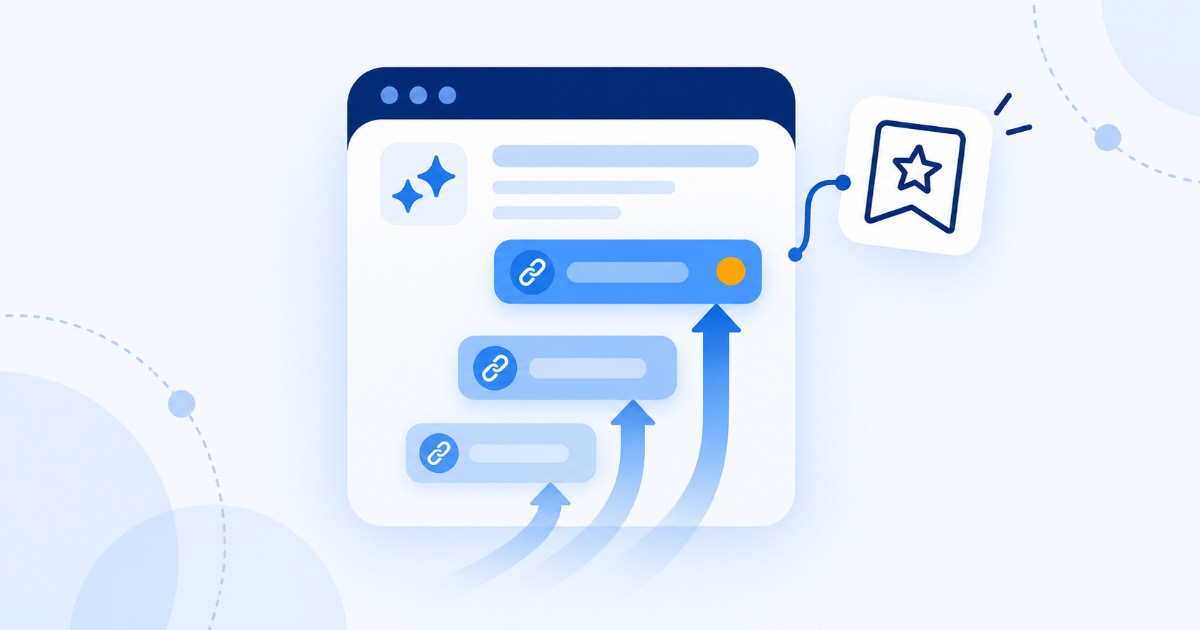
Ask about anything current, prices, recommendations, "best X near me", recent events, and the assistant runs a web search, reads a handful of top results, and composes its answer from them, usually with citations. This is retrieval, sometimes called RAG, and it changes the game in three ways:
- It happens in seconds, on a few pages. The assistant does not read the whole internet; it reads perhaps five to ten documents that its search step surfaced. Being one of those documents is the entire contest.
- Traditional search still guards the gate. The retrieval step leans on search indexes and ranking signals, which is why pages that rank well get read, and why classic SEO remains the entry ticket to AI citations. Our SEO vs AEO comparison maps that overlap.
- Extraction favors structure. From each page it reads, the assistant lifts the passage that answers the question most cleanly. Direct answers high on the page, clear headings, tables, and marked-up facts win the quote; buried conclusions lose it.
How assistants choose which sources to trust
Across both pipelines, the same properties keep deciding who gets believed and cited:
- Consistency: the same facts about you appearing everywhere, from your site to your profiles to third-party coverage;
- Independent corroboration: claims echoed by sources you do not control, which is why earned coverage and community mentions outweigh anything you publish about yourself;
- Structure and clarity: content a machine can parse into facts without guessing;
- Freshness: recent activity, because a source that updates reads as a source that is alive.
Notice what is absent: advertising. There is no paid placement inside assistant answers today, which makes this one of the few visibility channels where earned presence is the only presence.
What this means for your business, concretely
- For the training pipeline: multiply consistent mentions. Identical boilerplate everywhere, steady coverage, and community presence teach the next model who you are. This compounds slowly and is nearly impossible for competitors to fake.
- For the retrieval pipeline: be findable and quotable today. Rank for the questions that matter, put the answer in the first sentences, and mark up your facts. This moves in weeks, not years.
- For both: run the checks in our 15-minute AI visibility self-test, which measures each pipeline separately, then work the misses through the AEO playbook.
Frequently asked questions
Why does an AI say wrong things about my business?
Either the training snapshot memorized outdated or thin information, or the retrieval step pulled a page that is wrong, often an old directory listing or a stale review profile. Trace which pipeline produced the error: answers with citations point you to the exact page to fix; answers without citations mean the memory itself is thin, and the cure is more consistent coverage.
Can I get wrong information about my company removed from an AI?
Not by request, in general. The reliable path is correction at the source: fix or remove the wrong pages, publish the right facts prominently, and let both pipelines re-learn. Retrieval-based answers usually correct within weeks of the web correcting; trained memory corrects at the next model release.
Do AI companies' crawlers visit my website?
Yes, and your server logs will show them: crawlers gathering training data and fetchers reading pages live during retrieval. They respect robots.txt directives, which leads to the next question.
Should I block AI crawlers in robots.txt?
Understand the trade before deciding. Blocking training crawlers keeps your content out of future model memory; blocking retrieval fetchers keeps you out of live, cited answers. For publishers selling content, blocking can be a rights position worth taking. For businesses that want customers, blocking is opting out of the channel this entire article describes, and your competitors will not join you.
The bottom line
Every AI answer is memory plus a quick reading list, and your visibility is your standing in both: how consistently the web has described you over years, and how findable and quotable you are this week. Neither can be bought, both can be built, and the businesses building now are writing themselves into the answers everyone else will be trying to enter later. If you want to know exactly where your brand stands in each pipeline today, our free SEO and AEO audit measures both and hands you the fix list in priority order.