

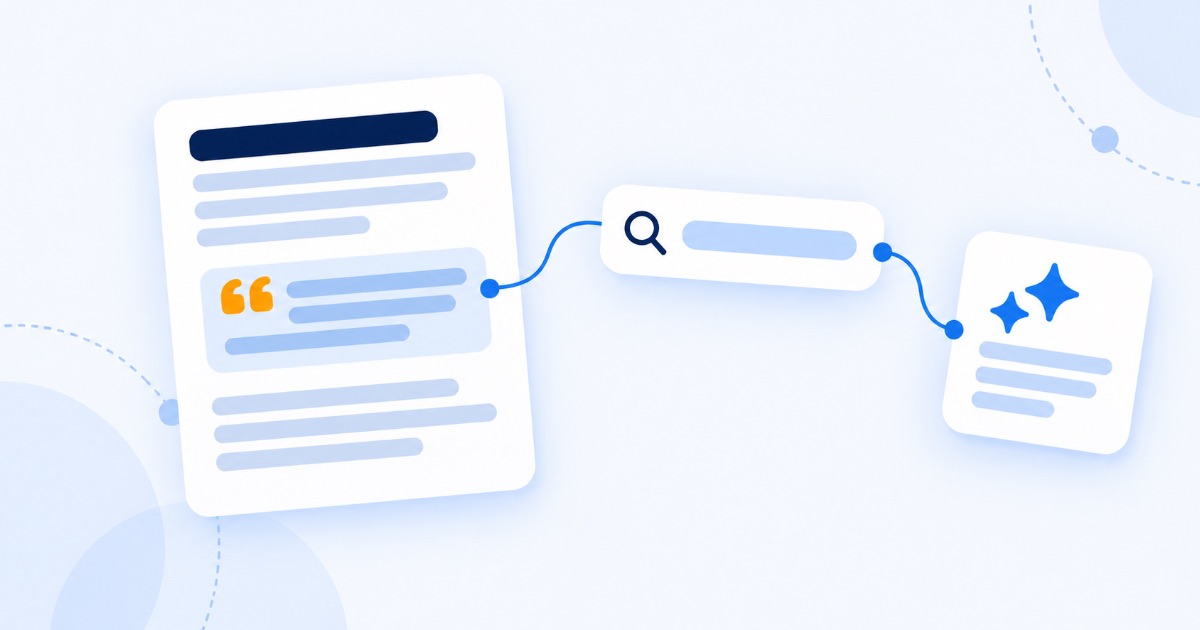
Journalists need expert voices every single day, and most of the people they quote are not famous. They are business owners and specialists who answered quickly, said something useful, and made the journalist's job easier. Each time that happens, you get more than a mention in one article. You get a trusted link or brand mention, proof of expertise people can check, and a fresh source AI assistants may read when they decide who to recommend. This guide shows you how to become that person.
Why a quote is worth more than it looks
A single quote does four jobs at once, which is why it is one of the best returns on time in all of marketing.
- Visibility. Readers see your name and business in a publication they already trust.
- Authority links. Many articles link to the experts they quote. Links placed by an editor on a real publication are among the most valuable a site can earn, as we explain in what backlinks are.
- Brand mentions. Even when there is no link, your name appearing next to your topic in trusted sources helps search engines and AI systems connect who you are with what you know.
- Proof. Every published quote is evidence of expertise that future customers, and future journalists, can find.
The quote flywheel
The real magic is that quotes compound. One leads to the next.
- You get quoted in an article about your topic.
- The article ranks and gets read, including by other journalists researching the same subject.
- They find you and come to you directly for the next story.
- Your name builds up across more articles, and search engines and AI start treating you as a known voice on that topic.
The hardest quote to get is the first one. After that, the flywheel does more of the work.
The 7-step playbook
Step 1: Pick three topics you can genuinely own
Do not be an expert on everything. Choose three specific subjects where you have real, hands-on experience and an opinion worth hearing. "Marketing" is too broad. "How small restaurants can fill quiet weekday evenings" is a topic a journalist can use.
Step 2: Build an expert page on your website
Journalists check who you are before they quote you. Give them one page that answers everything: a real photo, a short bio, your three topics, any past coverage, and how fast you can respond. This page also helps search engines and AI understand that you are a real person with real expertise, which matters more than ever now that Google treats invented author profiles as deception, as we covered in Google's rules on AI content.
Step 3: Go where journalists ask for help
Journalists post requests for expert sources every day. Look in three places:
- Source request platforms and newsletters, where journalists list what they need and when.
- Social media, where many reporters share requests publicly, often under a long-running tag such as #JournoRequest.
- Local and trade journalists, who cover your town or industry. Follow them, read their work, and introduce yourself before you need anything.
Step 4: Answer fast, and answer well
Speed wins. Journalists work to tight deadlines, and the first useful reply often gets the quote. Use this structure:
- One direct answer to exactly what they asked, in the first line.
- One specific insight only someone with your experience would know: a number, an example, or a surprising detail.
- One quotable sentence, short and clear enough to drop straight into an article.
- One line of credentials, your name, role, business, and website.
Here it is as a template:
"Hi [Journalist name], replying to your request about [topic]. [Direct answer in one sentence.] In my experience running [business], [specific insight or example]. [Short quotable line.] I'm [Name], [Role] at [Business], [website]. Happy to answer follow-up questions today."
Step 5: Prepare for predictable stories
Many stories return every year: seasonal shopping, annual reports, holidays, new regulations, tax deadlines. Write short, ready-made comments on the predictable stories in your field and keep them in a document. When the moment arrives, you reply in minutes while others are still thinking. Our list of story ideas that get businesses into the news is a good place to find your own recurring angles.
Step 6: Make every quote compound
When an article goes live, thank the journalist, share the piece, and add it to your expert page. If your quote appears without a link, you may politely ask whether one can be added, but never insist. The relationship with the journalist is worth more than any single link.
Step 7: Turn quotes into content
A good quote is a seed. Expand it into a blog post, a social post, a newsletter, or a full press release if the topic is big enough. For news you want to reach a wide audience, a well-written release does the heavy lifting, and our guide on how to write a press release shows how.
Quotes, press releases, and guest posts compared
Each has a place. Here is how they differ.
| Expert quotes | Press releases | Guest posts | |
|---|---|---|---|
| Who decides it runs | The journalist | You, through distribution | The site editor |
| Effort per piece | Low, a short reply | Medium, a full release | High, a full article |
| Credibility with readers | High, chosen by a journalist | Medium, clearly your news | Medium, your byline |
| Control over message | Low | High | High |
| Best for | Ongoing authority | Big news and reach | Deep expertise on one topic |
The strongest approach uses all three: quotes for steady authority, press releases for your biggest moments, and guest posts for depth. We explain how releases fit into search in what press releases do for SEO.
Mistakes that get you ignored
- Turning the quote into an advert. Journalists cut sales talk instantly. Be useful, and your business name does the selling.
- Answering a different question. Read the request twice and answer exactly what was asked.
- Missing the deadline. A brilliant answer a day late is worthless.
- Sending generic AI-written replies. Journalists see hundreds and can spot them at a glance. Use AI to tidy your words if you like, but the insight must be yours and every fact must be true.
- Paying for "guaranteed" editorial features. Real editorial coverage cannot be bought. If someone guarantees it, it is usually an advert in disguise, and readers can tell.
Why this matters even more in AI search
AI assistants build their answers from sources they trust, and established publications are among the most trusted. When your name and expertise appear in those publications, consistently and on the same topics, you become part of the material AI draws on when someone asks a question in your field. Our guide to getting your brand cited by AI covers the full picture. A quote you give today can keep shaping answers long after the article is published.
Frequently asked questions
How do I get quoted in the media as a small business owner?
Choose a few topics where you have real experience, build a simple expert page on your website, and respond quickly to journalists' requests for sources with a direct, specific, quotable answer. Consistency matters more than fame.
Do expert quotes help SEO?
Yes. Quotes often come with links from trusted publications and always create brand mentions, both of which help search engines and AI systems recognise your authority on a topic. They also build a public record of expertise that supports everything else you publish.
How long does it take to get the first quote?
It varies. Some people land a quote within their first few replies, others take a few weeks. Answering quickly and specifically, every day or two, is what shortens the wait.
Do I need a PR agency to get quoted?
No. Anyone with real expertise can respond to journalists directly. An agency can save time and open doors, but the most important ingredients, your knowledge and your speed, are already yours.
What if the article does not link to my website?
The mention still has value for visibility, credibility, and how AI systems connect your name to your topic. You can politely ask whether a link can be added, but never demand one.
The bottom line
Journalists need experts, and you already have the expertise. Pick your three topics, build your expert page, and answer one journalist request this week. Each quote earns visibility today and authority that keeps working in search and AI answers for years. Get quoted, get found.
Have a story bigger than a quote? Our press release service turns it into a professionally written release and distributes it across our publishing network. Want to see how visible your expertise already is? Start with our free SEO and AEO audit.